
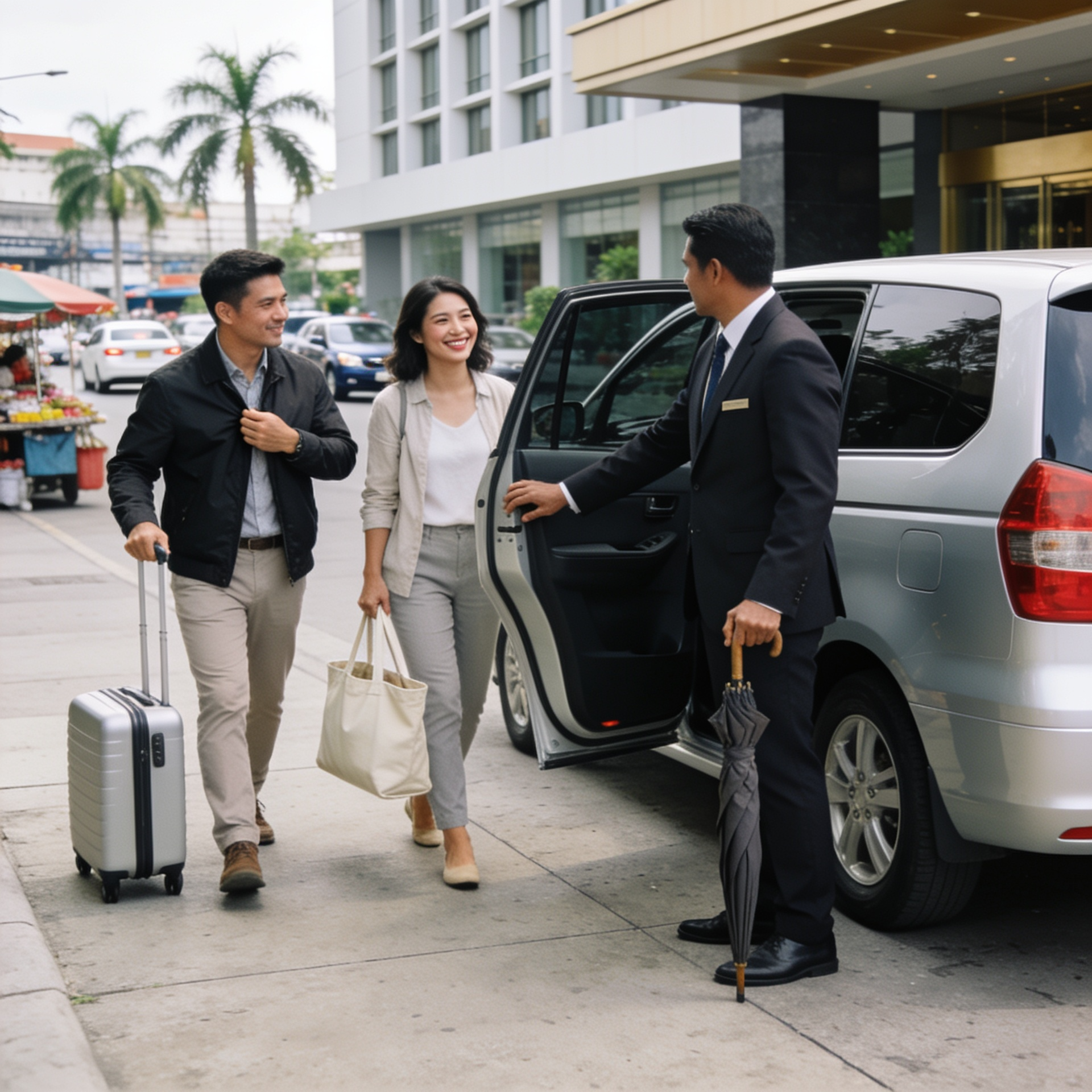
Renting a vehicle with a professional driver can make travel easier for families, business travellers, tourists, and organised groups. A car rental in the Philippines with a driver removes the need to navigate unfamiliar roads, manage parking, or assign someone in the group to drive.
However, the right arrangement depends on more than choosing a vehicle. Travellers should consider the route, passenger count, luggage, schedule, rental duration, and type of journey before confirming a booking.
This guide explains how chauffeur-driven rentals work, what information to prepare, and how to choose a vehicle that fits the trip.
How Does Car Rental with a Driver Work?
A chauffeur-driven rental provides both the vehicle and a professional driver for an agreed itinerary. The booking may cover a short point-to-point journey, a full-day schedule, an airport transfer, or a multi-day trip.
The customer usually provides the travel details before receiving a quotation. The transport provider then recommends a suitable vehicle based on the passengers, luggage, destinations, and expected rental period.
Unlike self-drive rentals, chauffeur-driven services allow passengers to focus on the journey instead of the road. This can be especially useful in Metro Manila, where traffic, parking, building access, and route changes can make driving more demanding.
Share the Full Itinerary
A complete itinerary helps the transport provider prepare the correct quotation and schedule.
Include:
- Travel date
- Pick-up time
- Pick-up address
- Destination
- Additional stops
- Expected return time
- Passenger count
- Luggage estimate
- Preferred vehicle
- Special passenger requirements
For a multi-stop booking, list each location in the correct order. Additional destinations may affect the route, rental duration, fuel, tolls, parking, and driver schedule.
Providing only the first destination can lead to misunderstandings later. Therefore, send the full plan before confirming the reservation.
Confirm the Rental Duration
Some customers need a vehicle for one transfer. Others require a driver for several hours, a full day, a week, or a longer business arrangement.
Before booking, clarify whether the service is:
- Point to point
- Half day
- Full day
- Overnight
- Multi-day
- Weekly
- Long term
- Airport transfer
- Provincial trip
The rental duration may affect the rate and any overtime conditions. In addition, overnight and provincial journeys may require driver accommodation or other arrangements.
Review the Inclusions
Not every transport quotation includes the same items. Ask what is covered before comparing rates.
Possible inclusions or additional charges may involve:
- Driver service
- Fuel
- Toll fees
- Parking fees
- Airport parking
- Waiting time
- Overtime
- Additional stops
- Driver meals
- Overnight accommodation
- Provincial travel
- Late-night or early-morning service
A written quotation should identify the vehicle, itinerary, duration, and applicable conditions. This makes the booking easier to review before payment or confirmation.
When Is a Chauffeur-Driven Rental Most Useful?
A vehicle with a driver can support many types of travel. The best use cases are often journeys where timing, coordination, presentation, or passenger comfort matter.
Airport Transfers
Airport transfers require more planning than an ordinary city pick-up. The transport provider may need the flight number, terminal, arrival time, passenger contact details, and luggage estimate.
A sedan may suit one or two passengers with light luggage. However, families and business groups may require an Innova, Grandia, or larger van.
Passengers should remember that flight arrival time is not the same as terminal exit time. Immigration, baggage claim, customs, and airport loading arrangements can affect the actual meeting schedule.
Corporate and Executive Travel
Companies may arrange chauffeur-driven vehicles for executives, clients, visiting employees, speakers, and business partners.
A corporate itinerary may include:
- Airport collection
- Hotel transfers
- Office visits
- Business meetings
- Site inspections
- Corporate events
- Dinner appointments
- Return airport transfers
Professional presentation is important in these situations. However, the vehicle should also support the passenger’s schedule, privacy, luggage, and need to rest between appointments.
An executive assistant or travel coordinator should provide each address, meeting time, and expected waiting period. Clear details help the driver and transport team plan the day more effectively.
Weddings and Private Events
Event transportation may involve more than one vehicle. The couple, family members, entourage, principal sponsors, or VIP guests may require different arrangements.
A wedding planner should consider:
- Hotel pick-up times
- Ceremony and reception venues
- Passenger groupings
- Return transport
- Elderly guests
- Children
- Luggage or event items
- Vehicle presentation
- Driver contact details
A premium vehicle such as a Toyota Alphard may suit wedding principals or important guests. Meanwhile, a Grandia or Commuter van may be more practical for the entourage or family group.
Family and Provincial Travel
Families may prefer a chauffeur-driven vehicle for long journeys, reunions, vacations, or visits outside Metro Manila.
A driver allows family members to rest, supervise children, assist older passengers, or enjoy the trip without assigning one relative to drive.
For provincial travel, provide the complete route and expected overnight arrangements. In addition, confirm whether tolls, fuel, parking, and driver accommodation are included in the quotation.
Group and Staff Transportation
Larger vehicles can help companies, schools, tour groups, and organisations move passengers under one schedule.
A shared vehicle may reduce the need to coordinate several separate cars. It can also make headcounts and arrival times easier to manage.
However, the organiser should still consider:
- Total passenger count
- Luggage or equipment
- Pick-up sequence
- Venue access
- Parking space
- Return schedule
- Number of vehicles required
One large vehicle is not always the best solution. Several smaller units may be more practical when passengers have different destinations or departure times.
How to Choose the Right Vehicle
The vehicle should match the journey rather than the customer’s general preference.
Consider the number of passengers, amount of luggage, duration, destination, and required level of presentation.
Dee Transportation Services offers different Toyota vehicles for individual, family, corporate, VIP, and group transportation.
Toyota Sedan for Individual Travel
A sedan may suit:
- One or two business travellers
- Couples
- Light airport luggage
- Hotel transfers
- Point-to-point city journeys
- Executive appointments
Its smaller size can be practical for city travel. However, customers should confirm whether the boot can accommodate all luggage.
A sedan may not be suitable when passengers carry several large suitcases, work equipment, or bulky items.
Toyota Innova for Families and Small Groups
The Toyota Innova offers more flexibility than a sedan. It may suit families, small corporate teams, or passengers travelling with a moderate amount of luggage.
It can work for:
- Airport transfers
- Family trips
- Business travel
- Provincial journeys
- Small group events
- Daily chauffeur service
Nevertheless, the practical passenger capacity may decrease when the group brings several large bags.
Toyota Alphard for Executive and VIP Transport
The Toyota Alphard is suited to passengers who value a quieter, more refined cabin.
It may be appropriate for:
- Senior executives
- VIP guests
- Dignitaries
- Wedding principals
- International clients
- Premium airport transfers
The Alphard is not designed to carry the largest possible group. Instead, it supports privacy, presentation, and passenger comfort.
Companies receiving an important guest may choose this vehicle for travel between the airport, hotel, and business appointments.
Toyota Grandia for Medium-Sized Groups
The Toyota Grandia may suit families, corporate teams, hotel guests, and private groups.
It provides more passenger capacity than an Innova while offering a comfortable environment for city or provincial travel.
The Grandia may work well for:
- Corporate delegations
- Airport groups
- Family outings
- Hotel transfers
- Private tours
- Event transport
Customers should still provide an accurate luggage estimate. A full passenger load may reduce the available storage area.
Toyota Commuter Deluxe for Larger Groups
A Commuter Deluxe can transport more passengers under one booking.
It may suit:
- Employee shuttles
- Company outings
- Tour groups
- School trips
- Conference transfers
- Large family groups
This option prioritises practical capacity. Therefore, it may be more appropriate than a premium van when the main goal is moving a larger group efficiently.
Toyota Coaster for High-Capacity Travel
The Toyota Coaster may suit institutions, government offices, schools, tour groups, and companies arranging larger group journeys.
It can help passengers stay together and follow one departure schedule. However, the organiser should confirm that the pick-up and destination can accommodate a larger vehicle.
Check:
- Parking access
- Loading areas
- Road width
- Hotel driveways
- Venue entrances
- Passenger boarding time
These details can affect whether a Coaster or several smaller vans are more practical.
What Should You Ask Before Booking?
A clear booking process reduces misunderstandings. Ask the transport provider specific questions before confirming the service.
Is the Driver Included?
Confirm that the quoted service includes a professional driver. In addition, ask whether the same driver will handle the full itinerary or whether a change may occur during longer arrangements.
What Is the Passenger and Luggage Capacity?
Do not rely only on the number of seats. Explain how many bags, strollers, mobility aids, boxes, or pieces of equipment the group will bring.
A vehicle may fit the passengers but not their belongings.
How Is Overtime Calculated?
Ask when overtime begins and how it is charged.
Traffic, delayed meetings, extended events, and late flights may cause the booking to exceed the original schedule. Understanding the overtime policy helps customers plan more accurately.
Are Tolls and Parking Included?
Some quotations may include fuel but exclude tolls and parking. Others may handle these charges differently.
Clarify the treatment of:
- Expressway tolls
- Airport parking
- Hotel parking
- Venue parking
- Building access fees
- Additional route charges
What Happens If the Schedule Changes?
Ask how to report changes to the pick-up time, route, terminal, or passenger count.
Early communication gives the provider a better chance to adjust the vehicle and driver schedule.
What Is the Cancellation Policy?
Review the company’s cancellation and rebooking conditions before paying.
This is especially important for flights, weddings, corporate events, and provincial trips, where schedule changes may affect several arrangements.
Common Mistakes to Avoid
Choosing the Cheapest Rate Without Checking Inclusions
A lower quote may exclude tolls, parking, waiting time, or overtime. Compare the full service rather than the starting amount.
Booking a Vehicle That Is Too Small
Passenger count and luggage should be considered together. Avoid filling every seat when the group carries several large suitcases.
Providing an Incomplete Route
A quotation based on one destination may not cover additional stops. Send the complete itinerary before confirming.
Assuming Exact Travel Times
Road conditions can change because of traffic, weather, accidents, construction, or local events. Build enough allowance into important journeys.
Failing to Share Special Requirements
Older passengers, children, VIP guests, and people with mobility concerns may need a different vehicle or additional assistance.
Waiting Until the Last Minute
Vehicle availability may be more limited during holidays, major events, weekends, and peak travel periods. Early booking also gives the organiser more time to review the itinerary and quotation.
Preparing for a Better Chauffeur-Driven Journey
A successful rental begins with complete trip details. Share the date, route, passenger count, luggage estimate, duration, and special requirements before confirming the vehicle.
Dee Transportation Services provides chauffeur-driven Toyota vehicles for airport transfers, corporate travel, family journeys, events, and larger group requirements. Customers can choose from practical city vehicles, executive units, vans, and high-capacity transport according to the trip.
To arrange a car rental in the Philippines with a driver, send Dee Transportation Services your itinerary, preferred schedule, passenger count, luggage details, and vehicle requirements. The team can then recommend an option suited to the actual journey.


Leave A Comment